

How to Build a Capsule Wardrobe on a Budget
Last Updated: October 2025
A capsule wardrobe sounds expensive. Quality pieces, timeless classics, investment dressing – it all seems out of reach when you’re on a budget. But here’s the truth: building a capsule wardrobe is actually one of the most budget-friendly approaches to fashion.
The average person wears only 20% of their wardrobe regularly. The rest? Wasted money sitting in your closet. A capsule wardrobe flips this completely – every piece gets worn, nothing goes to waste, and you spend less overall.
I’ll show you exactly how to build a practical capsule wardrobe without breaking the bank.
- What Is a Capsule Wardrobe?
- Why a Capsule Wardrobe Saves Money
- Step 1: Audit Your Current Wardrobe
- Step 2: Define Your Colour Palette
- Step 3: The Essential Capsule Wardrobe List
- Step 4: Build Your Capsule on a Budget
- Step 5: Maximise Your Capsule Wardrobe
- Common Capsule Wardrobe Mistakes
- Maintaining Your Capsule Wardrobe
- Real Budget Examples
- Why This Works
- Getting Started Today
- Final Thoughts

What Is a Capsule Wardrobe?
A capsule wardrobe is a curated collection of versatile clothing (typically 30-50 pieces) that works together to create multiple outfits. The key principles:
- Quality over quantity – fewer items that last longer
- Versatility – each piece works with several others
- Timeless style – classic pieces that don’t date quickly
- Cohesive colours – everything coordinates
- Suits your lifestyle – practical for your actual life
The result? You need less, spend less, and always have something to wear.
Why a Capsule Wardrobe Saves Money
Let’s break down the maths:
Traditional wardrobe:
- 100 items at average £15 each = £1,500
- Wear each item 5 times = £3 per wear
- Replace 30% annually = £450/year
Capsule wardrobe:
- 40 items at average £35 each = £1,400
- Wear each item 50 times = 70p per wear
- Replace 10% annually = £140/year
Result: Save £310 per year, plus reduced storage, laundry, and decision fatigue.
The initial investment might be similar, but cost-per-wear and longevity make capsule wardrobes significantly cheaper.
Step 1: Audit Your Current Wardrobe
Before buying anything, see what you already have.
The sorting method:
- Remove everything from your wardrobe
- Create three piles:
- Keep: Fits well, you love it, worn in past 3 months
- Maybe: Unsure, needs mending, seasonal
- Remove: Doesn’t fit, haven’t worn in a year, don’t love it
- Be brutal: If you haven’t worn it in a year, you won’t wear it
- Deal with the “Remove” pile:
- Sell on Vinted/Depop
- Donate to charity shops
- Give to friends
- Textile recycling (worn-out items)
Don’t throw away! Selling unwanted items funds your capsule wardrobe.
What you’re looking for:
- Gaps in your wardrobe (missing basics)
- Colours that dominate (your natural palette)
- Styles you actually wear (not what you wish you wore)
- Items that need replacing
Step 2: Define Your Colour Palette
A cohesive colour palette means everything works together.
Choose 2-3 neutrals:
Add 1-2 accent colours:
- Whatever you love and suits you
- Examples: burgundy, forest green, rust, blush
Why this works: Every top pairs with every bottom, maximising outfit combinations.
Budget tip: Building around neutrals means secondhand shopping is easier – you’re not hunting for specific shades.
Step 3: The Essential Capsule Wardrobe List
Here’s a practical 30-piece capsule wardrobe for the UK climate:
Tops (10 items)
- 3 basic t-shirts (neutral colours)
- 2 long-sleeve tops
- 2 shirts/blouses
- 2 jumpers
- 1 cardigan
Bottoms (7 items)
- 2 pairs of jeans (one dark, one light or black)
- 2 pairs of trousers (smart and casual)
- 1 skirt or dress trousers
- 1 pair of shorts (summer)
- 1 dress that works multiple seasons
Layering (5 items)
- 1 blazer or smart jacket
- 1 denim or casual jacket
- 1 winter coat
- 1 waterproof jacket
- 1 hoodie or sweatshirt
Dresses (3 items)
- 1 casual day dress
- 1 work/smart dress
- 1 occasion dress
Shoes (5 items)
- 1 pair of trainers
- 1 pair of smart shoes
- 1 pair of boots
- 1 pair of sandals
- 1 pair of everyday flats
Total: 30 pieces (excluding underwear, loungewear, gym wear, and accessories)
This creates 50+ outfit combinations.
Step 4: Build Your Capsule on a Budget
Strategy 1: Shop Secondhand First
The most affordable way to build a capsule wardrobe is buying secondhand.
Where to shop:
- Vinted (£3-20 per item) – Best for fast fashion secondhand
- Depop (£8-30) – Curated, trendy secondhand
- eBay (all prices) – Great for specific items
- Facebook Marketplace (£5-20) – Local finds
Secondhand shopping tips:
- Search by specific brands you want
- Look for natural fabrics (cotton, wool, linen)
- Don’t buy if it needs expensive alterations
- Bundle items from same seller to save postage
Budget example:
- 10 secondhand items from Vinted/charity shops: £100
- 10 sale items from ethical brands: £250
- 10 full-price basics from affordable ethical brands: £200 Total: £550 for 30-piece capsule wardrobe
Strategy 2: Buy from Affordable Ethical Brands
Focus on brands offering quality basics at reasonable prices:
- Yes Friends – Organic cotton tees from £7.99
- Lucy & Yak – Quality basics £18-55
- Rapanui – Made-to-order from £25
- Thought Clothing – Natural fibres, great sales
When to buy new:
- Items that need perfect fit (jeans, trousers)
- Underwear and socks
- Items you’ll wear 100+ times
Strategy 3: Wait for Sales
Ethical brands have regular sales with 30-70% off:
Best sale periods:
- January sales (post-Christmas clearance)
- July sales (summer clearance)
- Black Friday (late November)
- Mid-season sales (March, September)
Sale shopping tips:
- Only buy items on your list
- Check return policies
- Stick to your colour palette
Strategy 4: Use the Cost-Per-Wear Formula
Before buying anything, calculate cost-per-wear:
Price ÷ Expected wears = Cost per wear
Examples:
- £60 coat worn 200 times = 30p per wear
- £15 trendy top worn 3 times = £5 per wear
Good value: Under £1 per wear
Excellent value: Under 50p per wear
This mindset stops impulse purchases and helps you invest in pieces you’ll actually wear.
Strategy 5: Build Gradually
Don’t buy everything at once. Build over 3-6 months:
- Month 1: Fill biggest gaps (missing basics)
- Month 2: Add versatile pieces
- Month 3: Complete with final items
- Months 4-6: Replace worn-out items from the old wardrobe
This spreads the cost and ensures you only buy what you actually need.
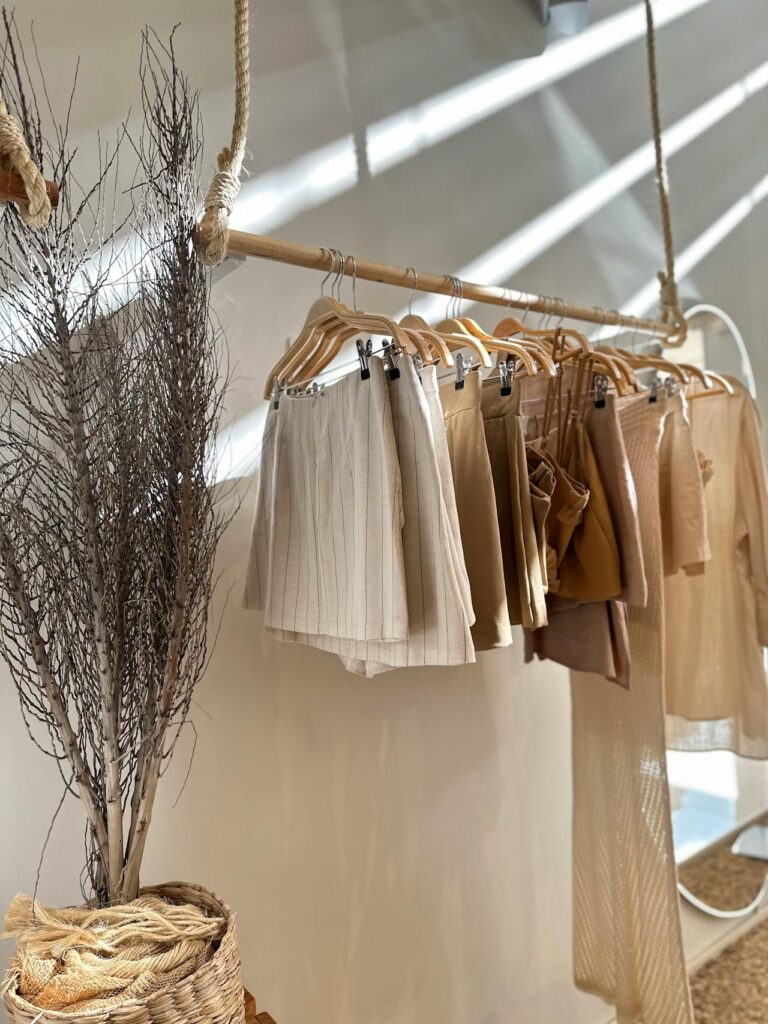
Step 5: Maximise Your Capsule Wardrobe
Mix and Match Formula
The 3x3x3 method:
- 3 tops × 3 bottoms × 3 shoes = 27 outfits
The layer method:
- Base (t-shirt) + bottom (jeans) + layer (cardigan) + shoes = infinite combinations
Outfit planning:
- Lay out weekly outfits on Sunday
- Take photos of favourite combinations
- Swap one item to refresh a look
Accessorise
Accessories multiply outfit options without adding bulk:
- Scarves (change the entire vibe)
- Belts (define waistlines, add interest)
- Jewellery (elevate basics)
- Bags (practical and stylish)
Budget tip: Accessories are brilliant secondhand finds (charity shops, car boots).
Care for Your Clothes
Make your capsule wardrobe last:
- Wash less often (unless visibly dirty)
- Use cold water (preserves fabric and colour)
- Air dry (tumble driers damage clothes)
- Store properly (fold knits, hang structured items)
Proper care doubles the life of your clothes.
Common Capsule Wardrobe Mistakes
Mistake 1: Buying for an Imaginary Life
Buy for your actual lifestyle, not the life you wish you had.
Reality check:
- Work from home? Don’t buy formal work clothes
- Never wear heels? Don’t force it
- Live in jeans? Build around that
Mistake 2: Following Someone Else’s Capsule
Your capsule wardrobe should reflect your life, not someone else’s.
Personalise it:
- Add more dresses if you love them
- Include gym wear if you exercise daily
- Extra jumpers for cold homes
Mistake 3: Buying Everything New
This defeats the budget purpose. Mix secondhand, sale items, and what you already own.
Mistake 4: Choosing Trends Over Classics
Capsule wardrobes should be mostly timeless (80%) with space for current styles (20%).
Timeless: White t-shirt, straight-leg jeans, trench coat
Trendy: This season’s popular colour, specific cut
Mistake 5: Cheap Over Quality
Don’t confuse budget-friendly with buying the cheapest option.
Instead:
- One £40 item that lasts 3 years
- Not four £10 items that last 3 months each
Maintaining Your Capsule Wardrobe
Seasonal Adjustments
UK weather requires seasonal tweaks:
Spring/Summer additions:
- Lighter fabrics
- Sandals
- Shorts/summer dresses
- Light jacket
Autumn/Winter additions:
- Knits
- Boots
- Coat
- Warmer layers
Storage tip: Rotate seasonal items in and out (store summer clothes in winter, vice versa).
The One-In-One-Out Rule
When adding new items, remove something old:
- Maintains wardrobe size
- Prevents accumulation
- Keeps you intentional
Exception: Replacing worn-out items
Annual Review
Once yearly, reassess your capsule:
Check:
- What didn’t get worn? (Remove it)
- What’s worn out? (Replace it)
- What’s missing? (Add it)
- Does it still suit your life? (Adjust if needed)
Real Budget Examples
Ultra-Budget Capsule (£200)
25 pieces:
- 15 secondhand from Vinted/charity shops: £100
- 5 Yes Friends basics: £50
- 5 sale items from Thought Clothing: £50
Focus: Secondhand shopping for most items, new basics only
Moderate Budget Capsule (£500)
30 pieces:
- 10 secondhand items: £150
- 15 sale items from ethical brands: £250
- 5 full-price essentials: £100
Focus: Mix of secondhand and ethical brand sales
Comfortable Budget Capsule (£1,000)
35 pieces:
- 10 secondhand for unique pieces: £200
- 20 from ethical brands (mix of sale and full-price): £600
- 5 investment pieces: £200
Focus: Higher quality items, more ethical brand purchases
All three create functional, versatile wardrobes. The difference is quality level and ethical purchasing percentage.
Why This Works
Building a capsule wardrobe on a budget works because:
- Buying less costs less – Simple maths
- Cost-per-wear beats upfront cost – Longevity saves money
- Secondhand is cheap – Often cheaper than Shein/Temu
- No impulse purchases – Intentional buying only
- Everything gets worn – No wasted money
- Quality lasts – Fewer replacements needed
The initial effort pays off in years of easier mornings, fewer purchases, and genuine savings.
Getting Started Today
Your action plan:
This week:
- Audit your current wardrobe
- Identify your natural colour palette
- List the gaps
This month:
- Sell unwanted items
- Shop secondhand for biggest gaps
- Buy 3-5 key basics
Next 3 months:
- Complete your capsule gradually
- Try different combinations
- Note what’s missing
Ongoing:
- Maintain your capsule
- Replace items as needed
- Resist fast fashion
Final Thoughts
A capsule wardrobe isn’t about deprivation or boring clothes. It’s about being intentional with your money and wardrobe.
By focusing on pieces you love and actually wear, mixing secondhand finds with affordable ethical brands, and calculating cost-per-wear instead of upfront cost, you’ll build a wardrobe that serves you better while spending less.
The capsule wardrobe mindset shift – from quantity to quality, from trends to timelessness, from impulse to intention – doesn’t just save money. It simplifies your life, reduces environmental impact, and helps you develop genuine personal style.
Start small. Buy secondhand. Build gradually. You’ll wonder why you didn’t do this years ago.
Related Posts:


You May Also Like

The Best Eco Friendly Gym Wear UK (What You Need to Know)

Non-Toxic Succulents For Cats
