
The Complete Guide to House Plants for Dark Rooms (That Actually Thrive)
When I first got into houseplants, I killed a lot of them. Not because I wasn’t trying — I was trying very hard. I was overwatering, misting, talking to them (yes, really). The problem was that I kept buying plants that needed decent light and putting them in rooms that simply didn’t have it.
North-facing rooms, hallways, that awkward bit of the landing where the light just doesn’t reach. I’ve got them all. And I kept setting plants up to fail by not thinking properly about what they actually needed.
The turning point was accepting that some rooms are just dim and working with that, rather than against it. There are brilliant plants that not only survive in low light but prefer it. Once I started matching the right plants to the right spots, everything changed.
So if you’ve got a dark room, a north-facing window, or just a corner that never sees direct sun, this is for you. These are the best houseplants for dark rooms in the UK, with honest advice on what each one actually needs.
Updated: September 2026
- Before We Start: What Does “Low Light” Actually Mean?
- Quick Comparison: Best Houseplants for Dark Rooms UK
- 15 Best Houseplants for Dark Rooms UK
- 1. ZZ Plant (Zamioculcas zamiifolia)
- 2. Snake Plant (Dracaena trifasciata, formerly Sansevieria)
- 3. Cast Iron Plant (Aspidistra elatior)
- 4. Pothos / Devil’s Ivy (Epipremnum aureum)
- 5. Peace Lily (Spathiphyllum)
- 6. Chinese Evergreen (Aglaonema)
- 7. Parlour Palm (Chamaedorea elegans)
- 8. Heartleaf Philodendron (Philodendron hederaceum)
- 9. Spider Plant (Chlorophytum comosum)
- 10. Calathea / Prayer Plant (Calathea and Maranta varieties)
- 11. Dracaena (Dracaena varieties)
- 12. Rubber Plant (Ficus elastica)
- 13. Monstera (Monstera deliciosa)
- 14. Haworthia (Haworthia varieties)
- 15. Fittonia (Fittonia albivenis)
- How to Care for Houseplants in Dark Rooms
- FAQs: Houseplants for Dark Rooms
- Final Thoughts
Before We Start: What Does “Low Light” Actually Mean?
This is important, because there’s a lot of confusion about it.
“Low light” does not mean no light. No plant can survive in complete darkness — they all need some to photosynthesise. What low light means is: no direct sunlight, indirect or filtered light, usually some distance from a window.
A north-facing room with a window counts as low light. A room with a small window on a cloudy UK day. Also low light. A hallway that gets a bit of reflected light from nearby rooms. Probably low light.
Actual darkness (a windowless bathroom, an interior cupboard) is different. If you want plants in spaces like that, you’ll need to either rotate them regularly into brighter spots or use a grow light to supplement.
The plants on this list will thrive in low light conditions without any extra faff. That’s the standard I’ve used.
Quick Comparison: Best Houseplants for Dark Rooms UK
| Plant | Light needed | Watering | Pet safe? | Good for… |
|---|---|---|---|---|
| ZZ Plant | Very low | Infrequent | No | Beginners, neglect-proof |
| Snake Plant | Very low | Infrequent | No | Bedrooms, air quality |
| Cast Iron Plant | Very low | Infrequent | Yes | Hallways, tough spots |
| Pothos | Low | Moderate | No | Trailing/hanging shelves |
| Peace Lily | Low-medium | Moderate | No | Flowering in low light |
| Chinese Evergreen | Very low | Moderate | No | Adding colour |
| Parlour Palm | Low | Moderate | Yes | Larger rooms |
| Heartleaf Philodendron | Low | Moderate | No | Fast growers, vines |
| Spider Plant | Low-medium | Moderate | Yes | Bedrooms, bathrooms |
| Calathea | Low | Regular | Yes | Striking leaves |
| Dracaena | Low | Infrequent | No | Tall statement plant |
| Rubber Plant | Low-medium | Moderate | No | Large, dramatic leaves |
| Monstera | Low-medium | Moderate | No | Bigger spaces |
| Haworthia | Low (for a succulent) | Infrequent | Yes | Small spaces, windowsills |
| Fittonia | Low | Regular | Yes | Colourful, compact |

15 Best Houseplants for Dark Rooms UK
1. ZZ Plant (Zamioculcas zamiifolia)
If you want a dark room plant that will not die on you, start here.
The ZZ plant is so tolerant of low light and neglect that it sometimes seems implausible. It grows from rhizomes (underground tubers) that store water, which means it can go weeks without being watered and won’t hold it against you. Its leaves are thick, waxy, and a deep, glossy green, and they look brilliant even after months of minimal attention.
It grows slowly, which is either a feature or a drawback depending on how patient you are. Give it a few years and it’ll make an impressive statement plant. There’s also a gorgeous black variety (Raven ZZ) if you want something more dramatic.
- Light: Happy in very low light. Will tolerate almost any spot that isn’t pitch dark.
- Watering: Every 2-4 weeks. Let the soil dry out completely between waterings. Err on the side of underwatering.
- Temperature: Fine at normal UK indoor temperatures. Doesn’t like frost.
- Watch out for: Overwatering. That’s really the only way to kill it.
- Pet safe? No (mildly toxic to cats and dogs if ingested).
- Where to buy in the UK: B&Q, Sainsbury’s, IKEA, most garden centres. Usually £8-£15 depending on size.
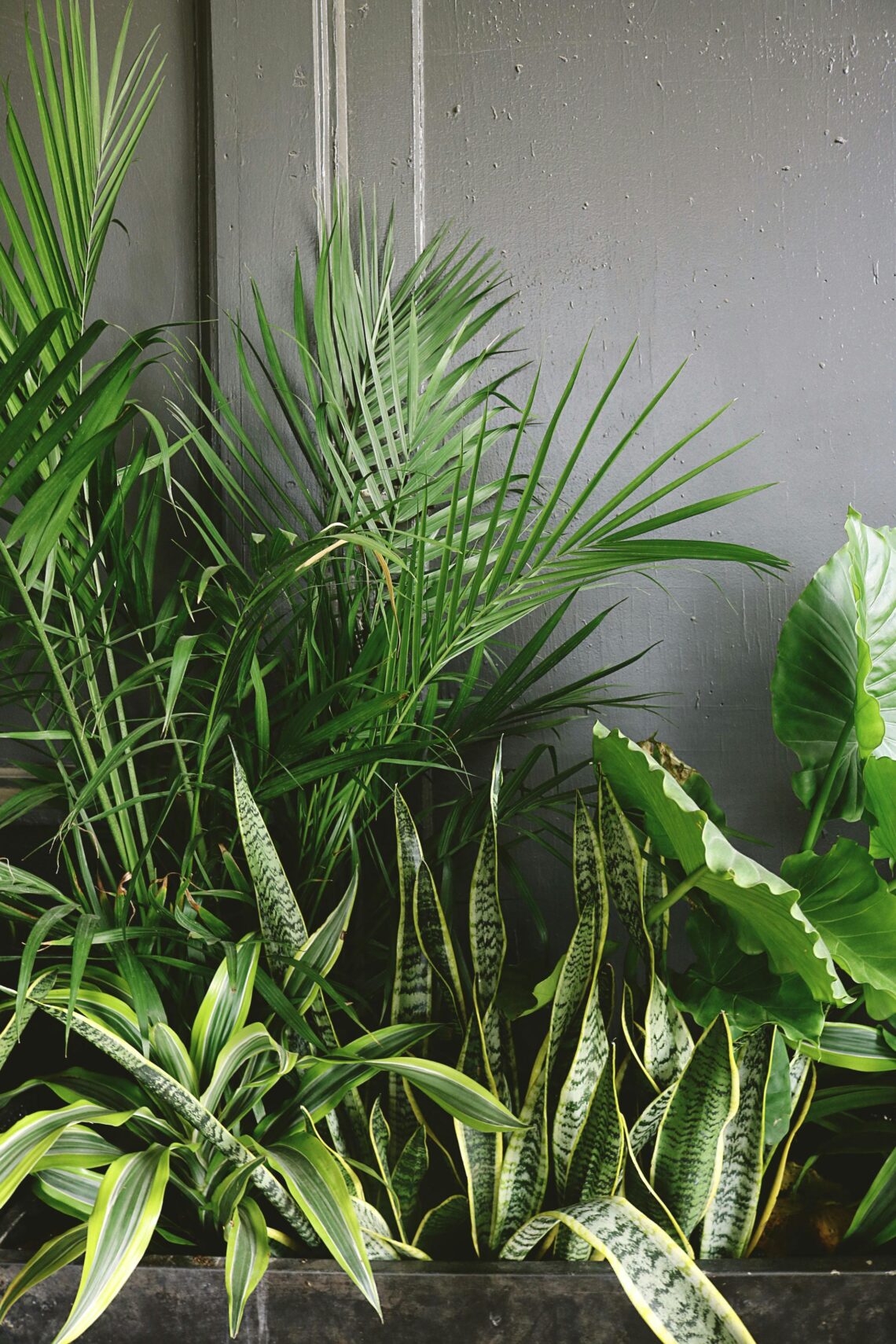
2. Snake Plant (Dracaena trifasciata, formerly Sansevieria)
The snake plant is probably the most well-known low-light houseplant, and it earns that reputation. It’s close to impossible to kill, looks architectural, and has been included in NASA’s clean air study — though the real-world air-purifying effects in a typical room are modest, and you’d need an implausible number of plants to make a measurable difference in air quality. Still, it’s a cracking plant.
The upright sword-like leaves, usually green with yellow edges, suit almost any room and it’ll grow happily in a dark corner. It also does something interesting at night: unlike most plants, it releases oxygen after dark rather than during the day, which is why people often recommend it for bedrooms.
There are many varieties. The standard laurentii (yellow-edged) is the most common. The cylindrica has rounded tubes instead of flat leaves and looks brilliant in a minimalist space.
- Light: Very low to medium. Absolutely fine in a north-facing room.
- Watering: Every 2-6 weeks depending on season. In winter, once a month is plenty. Let the soil dry fully between waterings.
- Temperature: Tolerates a range, but doesn’t want to drop below about 10°C for extended periods.
- Watch out for: Overwatering. Root rot is the main snake plant killer.
- Pet safe? No (toxic to cats and dogs).
- Where to buy in the UK: Everywhere. B&Q, Wilko, Sainsbury’s, Dobbies. From about £6 for a small one.
3. Cast Iron Plant (Aspidistra elatior)
The name says it all. The cast iron plant was the go-to Victorian houseplant precisely because Victorian houses were often dark, cold, and draughty, and this one coped with all of it.
It’s not the flashiest plant. Deep green, strap-like leaves, grows slowly, doesn’t do anything particularly exciting. But it will survive conditions that would finish off almost anything else: very low light, temperature swings, irregular watering, neglect. It’s the one I’d put in a dark hallway where no other plant has a hope.
And it’s pet safe, which puts it ahead of quite a few others on this list.
- Light: Very low. One of the most shade-tolerant plants you can buy.
- Watering: Once a fortnight in summer, once a month in winter. Very tolerant of drought.
- Temperature: Hardy in most UK homes. Can even survive some outdoor frost.
- Watch out for: Brown tips from fluoride in tap water. Use filtered or rainwater if you notice this.
- Pet safe? Yes.
- Where to buy in the UK: Garden centres, specialist plant shops, online from Patch Plants or The Stem. Less common in supermarkets. Around £12-£25 depending on size.
4. Pothos / Devil’s Ivy (Epipremnum aureum)
Pothos is the houseplant I recommend most often, and it’s particularly good for dark rooms because it grows fast enough that you actually see results even without great light.
The trailing vines are gorgeous: heart-shaped leaves, often variegated with splashes of yellow or white, and they look brilliant in a hanging pot or trailing off a shelf. The golden pothos is the classic, but there are lots of varieties — marble queen, neon (almost lime green), N-Joy, and more.
One thing I love about pothos: it tells you when it needs water. The leaves look ever so slightly limp or dull just before they’re thirsty. Much easier to read than prodding the soil.
- Light: Low to medium. Variegated varieties need slightly more light to keep their markings; plain green ones are most tolerant of lower light.
- Watering: Every 1-2 weeks. Let the top few centimetres of soil dry out before watering again.
- Temperature: Happy in normal UK indoor temperatures. Don’t let it get cold.
- Watch out for: The variegation can revert to plain green in very low light. Not a disaster, but worth knowing.
- Pet safe? No (toxic to cats and dogs).
- Where to buy in the UK: Very easy to find. IKEA, B&Q, Sainsbury’s, Aldi during their plant events. From around £5.
5. Peace Lily (Spathiphyllum)
If you want a dark room plant that also flowers, the peace lily is your answer. It’s one of the very few plants that will produce blooms in low light, with elegant white spathes that last for weeks.
It does have a slightly dramatic personality. When it’s thirsty it wilts quite noticeably — more theatrically than most plants. It does bounce back quickly once watered, and I find it quite satisfying to watch it perk back up. Peace lilies also like humidity, so they’re happy in a bathroom that gets some natural light, or a kitchen.
- Light: Low to medium. Will flower more readily with a bit more indirect light, but will produce some blooms in a dim room.
- Watering: When the soil feels dry or when it starts to droop. Usually once a week in summer, less in winter.
- Temperature: Keep above 15°C. Draught-sensitive.
- Watch out for: Brown leaf tips. Usually caused by fluoride in tap water or dry air. Try room-temperature filtered water.
- Pet safe? No (toxic to cats and dogs if ingested).
- Where to buy in the UK: Very widely available. Supermarkets, florists, garden centres. From around £6-£10.
6. Chinese Evergreen (Aglaonema)
Chinese evergreens are massively underrated, particularly for adding colour to a dark room without needing loads of light.
They come in a brilliant range of leaf colours — from deep green with silver markings to pink, red, and orange varieties. The more colourful the variety, the more light it needs. The green and silver types are the most shade-tolerant and, in my opinion, among the most elegant plants on this list.
- Light: Very low (for the green varieties) to medium. The pink and red varieties need more light to keep their colour.
- Watering: Every 1-2 weeks. Let the soil dry out between waterings. Reasonably forgiving.
- Temperature: Likes warmth. Keep above 15°C and away from draughts.
- Watch out for: Yellow leaves from overwatering or cold.
- Pet safe? No (toxic to pets and mildly irritating to skin when handling).
- Where to buy in the UK: B&Q, Dobbies, specialist houseplant shops online. Around £10-£20.
Suggested alt text: Chinese evergreen with silver and green patterned leaves in a dim corner of a UK living room
7. Parlour Palm (Chamaedorea elegans)
Another Victorian favourite, and another plant that earns its place by thriving in lower light.
Parlour palms are compact, elegant, and a bit different from the usual low-light suspects. They’ve got proper palm fronds that grow in arching sprays and do well in bathrooms and living rooms with indirect light. They grow slowly but are long-lived — a well-cared-for parlour palm can outlast most other houseplants by years.
They’re also pet safe, which is worth knowing if you’ve got cats or dogs.
- Light: Low to medium indirect light. North-facing rooms are fine.
- Watering: Every 1-2 weeks in growing season. Let the top layer of soil dry out. In winter, pull back to every 2-3 weeks.
- Temperature: Comfortable between 15-25°C. Doesn’t like cold draughts.
- Watch out for: Brown tips from dry air or fluoride in tap water. They prefer some humidity.
- Pet safe? Yes.
- Where to buy in the UK: IKEA (usually very well priced), B&Q, garden centres. From about £8.
8. Heartleaf Philodendron (Philodendron hederaceum)
If you like the look of pothos but want something that grows a bit faster and slightly more dramatically, heartleaf philodendron is worth trying. The leaves are a similar heart shape but slightly more velvety in texture, and it trails and climbs readily — give it a moss pole and it’ll go for it.
It’s a genuine fast grower even in lower light, which makes it satisfying to look after. I’ve watched cuttings turn into long, trailing plants within a few months. It’s also easy to propagate, so once you’ve got one, you can keep making more.
- Light: Low to medium indirect light. Happy in a north-facing room.
- Watering: Every 1-2 weeks. Allow the top half of the soil to dry between waterings.
- Temperature: Standard indoor temperatures. Avoid cold windowsills in winter.
- Watch out for: Leggy growth and small leaves in very low light. Usually means it wants a slightly brighter spot.
- Pet safe? No (toxic to pets).
- Where to buy in the UK: Widely available. Supermarkets, IKEA, online plant shops. From around £6.
9. Spider Plant (Chlorophytum comosum)
Spider plants get dismissed as old-fashioned, and I don’t understand why. They’re lovely. They grow quickly, produce loads of offshoots (the “spiders” that dangle on long stems), and they’re one of the few plants on this list that’s completely safe for cats and dogs.
They do well in bathrooms, cope with a bit of neglect, and grow happily in lower light — though they’re versatile enough to handle brighter spots too. Read our full spider plant care guide for more on keeping them happy.
- Light: Low to medium. The variegated types (green with a cream stripe) keep their markings even in lower light.
- Watering: Every 1-2 weeks. Fairly forgiving if you forget.
- Temperature: Happy in most UK indoor temperatures. Fine in a slightly cooler room.
- Watch out for: Brown tips. Often caused by fluoride or chlorine in tap water, or low humidity.
- Pet safe? Yes.
- Where to buy in the UK: One of the most available houseplants in the UK. Often free from friends who have a mature one. From around £4.

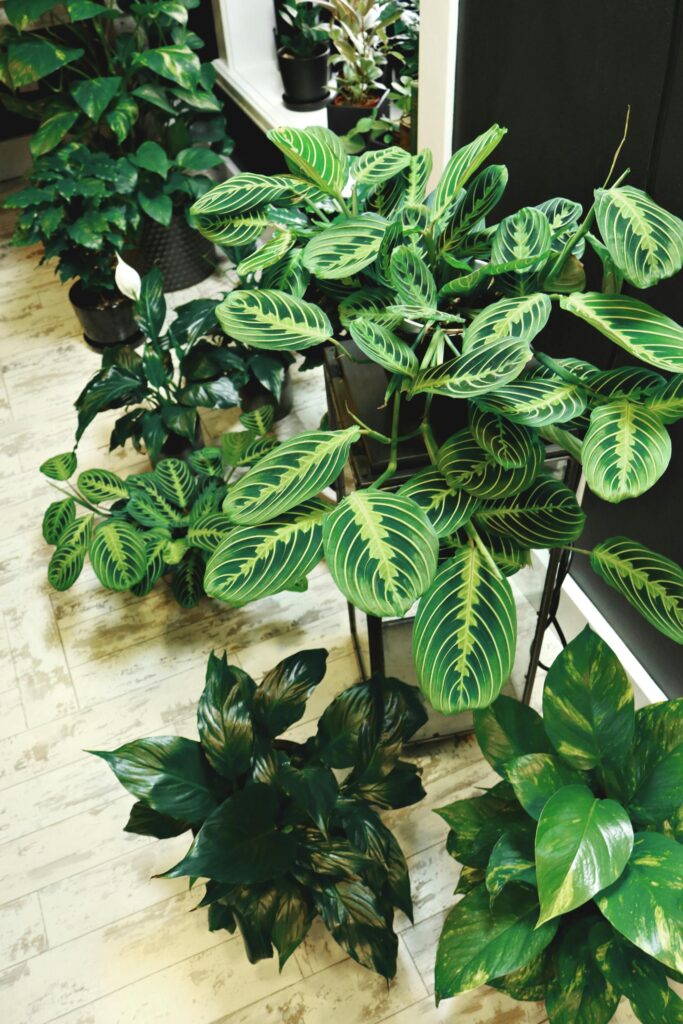
10. Calathea / Prayer Plant (Calathea and Maranta varieties)
Calatheas have a reputation for being dramatic, and honestly, they’ve earned it. They’re the houseplant equivalent of a diva: beautiful, striking, and with very specific feelings about their conditions.
But they dislike direct sunlight (it bleaches their gorgeous patterned leaves), so a bright indirect or low light spot suits them very well. The leaves are stunning — deep green with purple undersides on some varieties, intricate patterns on others — and they’re one of the pet-safe options too.
The Maranta leuconeura (prayer plant) is a bit easier to manage if you’re new to this group. See our prayer plant care guide for more detail.
- Light: Low to medium indirect. No direct sun.
- Watering: Keep the soil consistently moist but not waterlogged. They prefer distilled or rainwater.
- Temperature: Above 15°C, away from draughts.
- Watch out for: Crispy leaf edges — usually low humidity. They like to be near a humidifier or a pebble tray with water.
- Pet safe? Yes.
- Where to buy in the UK: Supermarkets, IKEA, specialist houseplant shops. From around £8-£15.
11. Dracaena (Dracaena varieties)
Dracaenas are the tall, architectural option for low-light rooms — the kind that make a statement in a corner without needing a south-facing window to do it.
There are many varieties. The massangeana (corn plant) has broad, strap-like leaves with a yellow stripe. The marginata has thin, spiky leaves with red edges and a more dramatic silhouette. Most varieties cope well with lower light, though they’ll grow more slowly and the variegation can fade a little in very dim conditions.
They get quite big over time, which is either a pro or a con depending on your space.
- Light: Low to medium. Good in offices and darker living rooms.
- Watering: Every 2-3 weeks. Very tolerant of underwatering. Let the soil dry out well between drinks.
- Temperature: Normal indoor temperatures. Don’t let it drop below 10°C.
- Watch out for: Brown tips from fluoride in tap water. Use filtered water if possible.
- Pet safe? No (toxic to cats and dogs).
- Where to buy in the UK: B&Q, garden centres, large supermarkets. From around £15 for a medium plant.
12. Rubber Plant (Ficus elastica)
Rubber plants need a little more light than some others on this list, but they’re worth including because they’re so striking and they do cope well in lower light rooms — just not the darkest corners.
The large, glossy leaves (deep green, burgundy on the ‘Burgundy’ variety, or variegated cream and green on the ‘Tineke’) look brilliant and they grow into impressive statement plants over time. Slow growers in lower light, but long-lived and low-maintenance once established.
- Light: Low to medium indirect light. Fine in a north-facing room with a window, but not as dark-tolerant as ZZ or snake plants.
- Watering: Every 1-2 weeks in growing season, less in winter. Let the top of the soil dry out.
- Temperature: Normal indoor temperatures. Doesn’t like cold draughts.
- Watch out for: Leaf drop when first moved to a new spot — it’s adjusting. Leave it alone and it usually settles.
- Pet safe? No (the sap is mildly irritating and toxic).
- Where to buy in the UK: B&Q, garden centres, IKEA. From around £10-£20.
13. Monstera (Monstera deliciosa)
Monstera deliciosa (Swiss cheese plant) is probably the most recognisable houseplant of the last decade, and it tolerates lower light better than most people think.
In a low-light spot it’ll grow more slowly and the leaves won’t develop their iconic fenestrations (the holes) quite as much, but it’ll stay healthy and look good. If you want the full holey leaf effect, give it a brighter spot. In a dim room, it’s still a decent option if you want something with a bit of wow factor. See our full monstera plant care guide for more on keeping it happy.
- Light: Low to medium indirect light. Handles lower light but grows and fenestrates less.
- Watering: Every 1-2 weeks. Let the top few centimetres of soil dry between waterings.
- Temperature: Above 15°C. Likes some humidity.
- Watch out for: Very slow, small leaf growth in very low light — a sign it wants more brightness.
- Pet safe? No (toxic to cats and dogs).
- Where to buy in the UK: One of the most widely stocked houseplants in the UK. From £10 at supermarkets and IKEA.
14. Haworthia (Haworthia varieties)
Hear me out on this one. Most succulents are useless in dark rooms — they need loads of light and go pale, leggy, and miserable without it. Haworthia is the exception.
It’s a small, compact, rosette-forming succulent that tolerates lower light far better than the rest of its family. It won’t grow fast, but it won’t give up on you either. It’s also tiny enough to tuck onto a small windowsill or a spot that gets just a little filtered light, and it needs watering less often than almost anything else on this list.
If you want a low-maintenance succulent for a dim room (and you’re tired of being told succulents are easy when they demonstrably aren’t in UK low-light conditions), haworthia is your answer.
- Light: Low to medium. Tolerates low light far better than most succulents. Still needs some light — it’s not a no-light plant.
- Watering: Every 2-4 weeks. Let it dry out completely.
- Temperature: Happy at normal indoor temperatures.
- Watch out for: Root rot from overwatering — the most common killer.
- Pet safe? Yes.
- Where to buy in the UK: Garden centres, supermarkets, IKEA (often in mixed succulent sets). From about £4-£8.
15. Fittonia (Fittonia albivenis)
Fittonia (also called the nerve plant or mosaic plant) is a great small plant for a dark room. The leaves are compact and intricately veined in white, pink, or red, and it stays low and bushy rather than growing tall — perfect for windowsills, terrariums, or bathroom shelves.
It does like to be kept moist and prefers humidity, so it’s a particularly good fit for bathrooms or kitchens. It wilts dramatically when thirsty, even more theatrically than a peace lily. But like peace lilies, it revives quickly once watered. See our fittonia plant care guide for more.
- Light: Low light, no direct sun. One of the better low-light options for a smaller plant.
- Watering: Keep the soil lightly moist. It doesn’t cope well with drying out completely. Little and often.
- Temperature: Above 15°C. Hates cold and draughts.
- Watch out for: The dramatic wilt when it’s thirsty. Water it and it’ll be fine.
- Pet safe? Yes.
- Where to buy in the UK: Most supermarkets, IKEA, garden centres. From around £5.
How to Care for Houseplants in Dark Rooms
Knowing which plants to choose is half the battle. Here’s the other half.
Water less, not more. Plants in lower light photosynthesise more slowly, which means they use water more slowly too. Overwatering is the number one cause of houseplant death, and it’s an even bigger risk in darker rooms. When in doubt, don’t water. Check our houseplant watering guide for more on how to read when plants are actually thirsty.
Use well-draining soil and pots with drainage holes. This applies to all houseplants, but particularly in low light where the soil takes longer to dry out. Waterlogged roots in a dim room is a reliable recipe for root rot.
Give them a summer holiday. In summer, moving your plants to a brighter spot (outside in light shade, or near a brighter window) for a few months can give them a real boost. They’ll store energy and come back to the darker spot healthier.
Dust the leaves. This sounds fussy, but a layer of dust on the leaves does reduce how much light the plant can absorb. A damp cloth once a month is all it takes.
Don’t fertilise in winter. In low light, plants grow slowly. Feeding them when they’re not actively growing just sits in the soil and can cause problems. Feed from spring to early autumn, then leave them alone.
Rotate occasionally. If your plant is near a window, rotate it every few weeks so all sides get even exposure. You’ll get a more symmetrical plant for it.
FAQs: Houseplants for Dark Rooms
Can any plants grow in a room with no windows? Not really. All plants need some light to survive. In a windowless room, you’d need to supplement with a grow light — a simple LED plant light works well and doesn’t need to be expensive. Without that, even the most shade-tolerant plants on this list will eventually decline.
What are the best houseplants specifically for dark bedrooms? Snake plants, ZZ plants, spider plants, and peace lilies all work well in bedrooms. Snake plants are often recommended because they release oxygen at night rather than CO2. If pet safety is a priority, spider plants are the one to go for. For bedroom-specific considerations including scent, size, and the sleep/air quality question, see the full post: Best Plants for Dark Bedrooms UK.
Are there any low-light plants safe for cats? Yes: spider plants, parlour palms, calatheas, cast iron plants, haworthia, and fittonia are all non-toxic to cats and dogs. The ZZ plant, pothos, snake plant, peace lily, and philodendron are toxic, so keep them out of reach if you’ve got pets. See also: pet safe houseplants UK.
Why are my low-light plant’s leaves going yellow? Nine times out of ten: overwatering. In a dark room, soil dries out very slowly, so it’s easy to water again before the plant actually needs it. Check the soil. If it’s still damp, leave it alone.
Can I put a plant in a dark corner with no window nearby? You can try the most shade-tolerant options (ZZ plant, cast iron plant), but they’ll slow right down and will eventually suffer. Rotating them to a brighter spot every few weeks, or using a grow light on a timer, is a much better long-term solution.
What plants are best for a north-facing room in the UK? Most of the plants on this list do well in a north-facing room with a window. The ZZ plant, snake plant, cast iron plant, pothos, and Chinese evergreen are particularly reliable. In the UK, north-facing rooms can get quite dim in winter, so these hardier options are the ones to prioritise.
Final Thoughts
Dark rooms are not the problem they seem to be once you stop trying to fight them. The plants on this list have all adapted to grow under forest canopies or in sheltered spots without direct sun. Low light is where they feel at home.
The biggest piece of advice I can give: start with one plant, get to know it, and then add more once you’ve got the hang of it. The ZZ plant or a snake plant are the most forgiving starting points. Get one of those thriving and you’ll have loads more confidence to branch out.
Which of these are you thinking of trying? I’d love to hear which plants you’ve had the most success with in darker spots — let me know in the comments.
Related posts:


You May Also Like

The Complete Guide to Thrift Stores and Charity Shops in York for Sustainable Shopping

Zero Waste Kitchen Hacks
