
What Are Perennial Plants?
Have you ever heard the term “Perennial” and wondered what it really stands for? Many people get confused with this word, thinking it only relates to plants. But, “perennial” has a broader aspect.
It comes from the Latin word “perennis”, meaning lasting through the year or years.
So let’s look at the definition of perennial, give examples of its use, and explain why it matters in different areas like gardening and nature. You’ll learn about perennial plants that bloom every year without replanting, streams that flow all seasons, and questions that people always ask.
- Definition of Perennial
- Examples of Perennial Uses
- Significance of Perennials
- Popular Perennial Plants
- Conclusion
- FAQs
- 1. What is the definition of a perennial plant?
- 2. How does a perennial differ from annual and biennial plants?
- 3. Can you provide some examples of popular perennials?
- 4. Does the term ‘perennial’ apply only to flowers?
- 5. How do perennial seeds germinate?
- 6. Are there any problems associated with growing perennials?

Definition of Perennial
The word “perennial” comes from the Latin term “perennis,” which means lasting through the year. This adjective applies to things that exist in all seasons, showing no break or pause.
For plants, it refers to those that live for several years and typically produce new growth each year from parts that survive underground during the colder months. These include herbaceous perennials like purple coneflower and black-eyed Susan, which die back in winter but return in spring.
Perennial also describes something that lasts an indefinitely long time or happens regularly.
Roman poets such as Ovid and scholars like Pliny used this term around 1660, highlighting its historical significance. As a noun, “perennial” identifies a plant with this enduring quality.
The adverb form is “perennially”, describing actions or states persisting over time. In gardens across cold climates and warmer weather alike, perennial plants contrast with annuals and biennials by regrowing every growing season without needing replanting after their first year of maturity.
Examples of Perennial Uses
Perennial plants
Perennial plants live for many years, regenerating each season. They bring life back to gardens every spring with new growth from their enduring parts.
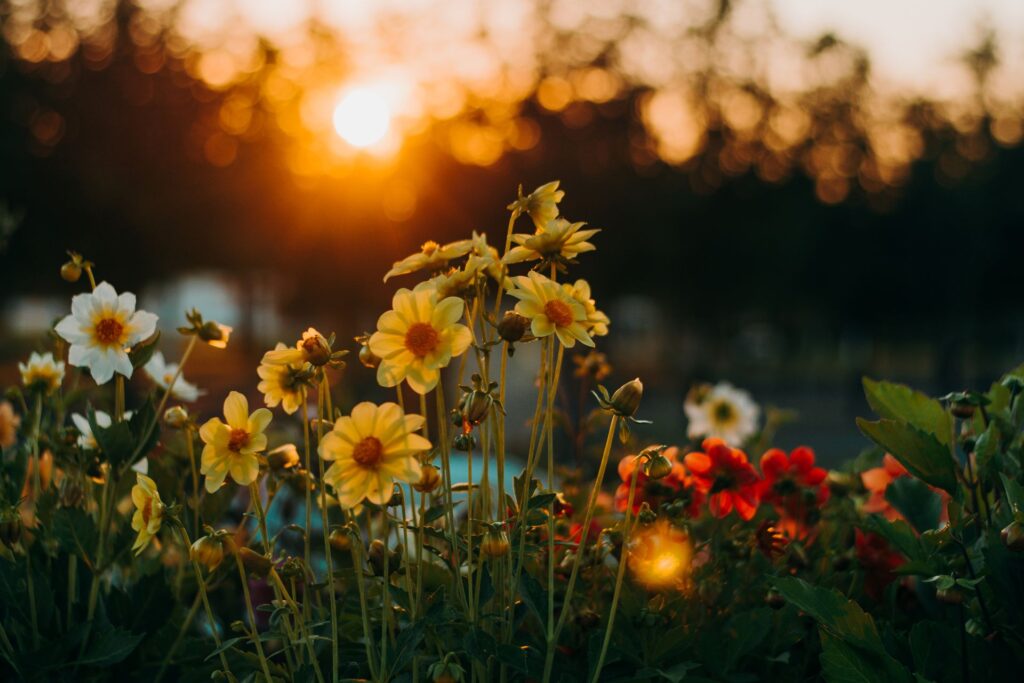
- Roses, geraniums, bellflowers, chrysanthemums, and dahlias stand out as examples of perennials. Each comes back yearly to bloom anew.
- Trees like oil palms and shrubs such as blueberries and cranberries are also perennials but provide fruits instead of just flowers.
- Asparagus is an economically important perennial because it can be harvested for several years after planting.
- Most garden perennials bloom for a limited time each year. Yet, with good care, they offer lasting foliage beauty.
- Perennial species cycle between growing and reproducing over the seasons. This makes them a vital part of the ecosystem.
- Some herbaceous plants die back in winter but return in early spring from their rootstock.
- Woody perennials include those with hard stems that survive above ground throughout the year.
- Every perennial adjusts to its soil type and growing conditions to thrive season after season.
- Gardeners value perennials for their attractive foliage and flower production that beautifies landscapes across the years.
By choosing the right mix of these resilient plants, one ensures a garden full of life and colour through every following spring and beyond into many a next year.
Perennial streams
Perennial streams flow all year round. They are crucial for the environment and local communities.
- Perennial streams have a steady flow due to rainfall and snowmelt.
- Groundwater also feeds into them, ensuring they never dry up.
- These streams support a wide range of life because of their constant flow.
- Fish and other aquatic creatures depend on perennial streams for habitat.
- They play a key role in defending against floods by absorbing excess water.
- Minimising pollution is another benefit, as these streams filter out contaminants.
- They assist in nutrient recycling, which benefits both land and water ecosystems.
- You can identify a perennial stream by its clear riverbeds and signs of aquatic life.
- Macroinvertebrates in the water are good indicators of a healthy perennial stream.
- Sediment patterns around these streams can indicate how stable their flow is.
These traits make perennial streams essential for ecological health and diversity.
Significance of Perennials
Ecological impact
Perennial plants play a crucial role in protecting soil and using nutrients and water effectively. Their extensive root systems delve deep into the earth, aiding in soil retention.
This obstructs erosion, a common issue in many regions leading to loss of fertile land. These roots extend further for water, rendering perennial plants more resilient in varied environments.
Grasslands, teeming with perennials like switchgrass and intermediate wheatgrass, have some of the healthiest soils worldwide due to this.
These plants strengthen soil and additionally support natural ecosystems by prominent presence in them. Almost all natural terrestrial habitats flourish with perennials which aid in maintaining environmental equilibrium.
They make substantial contributions to sustainable agriculture practices by improving nutrient and water absorption through their roots. This builds crops’ capacity to endure different conditions without requiring excessive human intervention or chemical inputs such as herbicides.
Cultural symbolism
In many cultures, perennials stand for lasting strength and the ability to bounce back. They show us life’s repeating cycles and how everything is linked. The lotus flower, often seen in water gardens or portrayed in art, tells a story of rising from darkness into light, symbolising spiritual growth.
This idea pushes people to think deeply about their own journeys through life.
Perennials also play a big role in how communities understand time and change. They mark seasons’ changes with their growth, rest, and renewal stages. By doing so, they remind everyone of nature’s constant rhythms.
In places where traditions hold strong ties to the land, such plants become key symbols in rituals that honour Earth’s enduring cycles. These practices help keep local cultures alive by passing down knowledge on living sustainably within our world’s ecosystems.
Popular Perennial Plants
Perennial Flowers:
- Daylilies (Hemerocallis)
- Hostas (Hosta spp.)
- Peonies (Paeonia spp.)
- Black-eyed Susans (Rudbeckia spp.)
- Coneflowers (Echinacea spp.)
- Astilbe (Astilbe spp.)
- Iris (Iris spp.)
- Sedum (Sedum spp.)
- Coreopsis (Coreopsis spp.)
- Geraniums (Geranium spp.)
Perennial Herbs:
- Lavender (Lavandula spp.)
- Thyme (Thymus spp.)
- Sage (Salvia spp.)
- Mint (Mentha spp.)
- Oregano (Origanum spp.)
- Chives (Allium schoenoprasum)
- Rosemary (Rosmarinus officinalis)
- Lemon Balm (Melissa officinalis)
- Parsley (Petroselinum crispum)
- Tarragon (Artemisia dracunculus)
Perennial Shrubs:
- Hydrangeas (Hydrangea spp.)
- Butterfly Bushes (Buddleja spp.)
- Forsythia (Forsythia spp.)
- Lilacs (Syringa spp.)
- Azaleas (Rhododendron spp.)
- Spirea (Spiraea spp.)
- Weigela (Weigela spp.)
- Potentilla (Potentilla spp.)
- Ninebark (Physocarpus spp.)
- Hibiscus (Hibiscus spp.)
Conclusion
Perennials teach us about nature’s cycle. They grow, bloom, and return each year. This cycle shows life’s resilience. Perennials in gardens or wild settings enrich our environment.
They also bring beauty and stability to ecosystems. Their roots dig deep, improving soil and supporting wildlife. Understanding perennials helps us appreciate the enduring aspects of the natural world around us.
FAQs
1. What is the definition of a perennial plant?
Perennial plants are those that live for more than two years, often producing new herbaceous growth each season from their woody stems or adventitious shoots.
2. How does a perennial differ from annual and biennial plants?
Annual plants complete their life cycle in one year, while biennials have a two-year life cycle where they set seed in the second year. Perennials, on the other hand, can survive for many years and regenerate through vegetative reproduction.
3. Can you provide some examples of popular perennials?
Popular perennials include bearded irises, Siberian iris, narcissus and common buttercup. Some shrubby plants like dusty miller are also considered as short-lived perennials.
4. Does the term ‘perennial’ apply only to flowers?
No, it’s not limited to flowers alone! The term ‘perennial’ applies broadly to non-woody plants including grasses and ferns as well as ornamentals like orchids.
5. How do perennial seeds germinate?
Perennial seeds typically have a dormancy period before they germinate into seedlings; this timing depends on various factors such as soil nutrients availability and time of year.
6. Are there any problems associated with growing perennials?
One potential issue could be weeds which are often hardy perennials themselves; these may compete with your preferred plants for resources leading to what gardeners call a “perennial problem”.


You May Also Like

Houseplant Watering Guide: How to Water Indoor Plants Correctly

Health Benefits Of Having Plants In Your Home
